🌊 Negócios em Emersão  ·  Vamos Emergir?  ·  Cadastre-se e ganhe 50 REC de bônus
Notícias

Acompanhe as Notícias da Recifes

Fique por dentro das últimas novidades sobre tecnologia, negócios e empreendedorismo.

58 notícias encontradas para "evolution"
Did gravitational tides cause Earth's extinctions?
Life on Earth took a long evolutionary journey that eventually created us, the purportedly intelligent species that dominates the planet. But there was no grand plan or design, only happenstance, nature and luck. Life on Earth suffered multiple extinctions, but got up, dusted its
AI reads 3D tooth microwear to reconstruct diets of early human ancestors
The study of dental microwear allows the analysis of the microscopic marks that foods leave on the surface of tooth enamel during mastication. In paleoanthropology, this methodology helps reconstruct the diet of fossil primates and hominins throughout human evolution. The microsc
The bond between humans and dogs remains remarkably consistent across societies, cross-cul
A new study by an international research team led by Friedrich Schiller University Jena and the Max Planck Institute for Evolutionary Anthropology (Leipzig) has revealed striking similarities in the way humans and dogs interact in very different societies. The research is publish
Foto: Rajath Ravi / Pexels
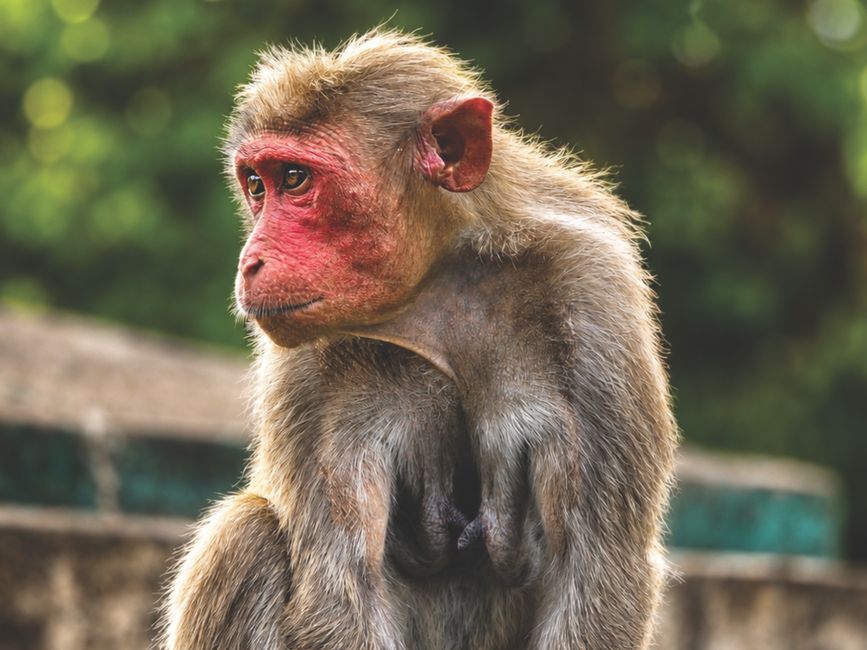
Primate evolution kept aging rates stable for 25 million years despite lifespan gaps
Biologists group animals with similar traits into broad categories called orders. Despite their similarities, animal species in the same order can have very different average lifespans.
Newly identified fossil sheds light on evolutionary history of saber-toothed cats
Fossils tucked away in a museum drawer and identified merely as "feline" are actually from a very ancient and enigmatic saber-toothed cat that inhabited North America more than 5 million years ago. Newly identified by a UC Berkeley paleontologist, the nearly complete skull helps
Scientists uncover evolutionary edge behind plant invasions
Plants that become invasive may owe their success to an advantage shaped long before they arrive, according to new research led by King's College London.
DNA databases unite to create a fully open resource for transposable element research
For more than three decades, researchers studying genomes have relied on foundational resources such as Repbase and, more recently, Dfam to identify and classify transposable elements—the mobile DNA sequences that shape genome structure, evolution and function. Now, Dfam and Repb
Tiny ancient fish fossil with preserved brain offers clues to early fish evolution
Over 300 million years ago, a minnow-sized fish died and fell to the bottom of a prehistoric swamp near the village of Trawden, Lancashire, in northwest England. The remains of this tiny fish—known as Trawdenia planti—became fossilized, embedding proof of its existence in a layer
Scientists discover a completely different way to fight viruses
Researchers have uncovered an unexpected antiviral defense system in sea anemones that works very differently from the one humans use. The discovery suggests evolution developed multiple ways to combat viruses, challenging long-held ideas about how animal immune systems evolved.
What made trees possible? New research points to drought
A study is reframing a fundamental question in plant evolution: What made trees possible? Researchers from Cal Poly Humboldt, Yale University, the University of Hohenheim in Germany and the Czech Academy of Sciences set out to understand how trees evolved and what allowed them to
Climate resilience of brown bears over 175,000 years revealed in 3D analyses of their jaws
European brown bears are masters of survival: These animals have weathered Pleistocene climate fluctuations and survived the cycles of ice ages and interglacial periods to the present day. Zoologists have now investigated the origins of this evolutionary flexibility: 3D analyses
Evolutionary origins of 'junk DNA' may provide new clues to cancer
In cancer research, one person's junk is increasingly becoming another person's treasure. Scientists have uncovered new evidence showing how recently evolved "junk DNA" genetic elements can become integrated into ancient cellular pathways that regulate cancer. These findings may