🌊 Negócios em Emersão  ·  Vamos Emergir?  ·  Cadastre-se e ganhe 50 REC de bônus
Notícias

Acompanhe as Notícias da Recifes

Fique por dentro das últimas novidades sobre tecnologia, negócios e empreendedorismo.

90 notícias encontradas para "object"
Foto: Zelch Csaba / Pexels
Uranus, Neptune may be magma worlds, not ice giants
Uranus and Neptune remain two of the most mysterious objects in the solar system, primarily because they have been visited only by NASA's Voyager 2 spacecraft in 1986 and 1989, respectively. Their "ice giant" moniker comes from longstanding hypotheses that their interiors are com
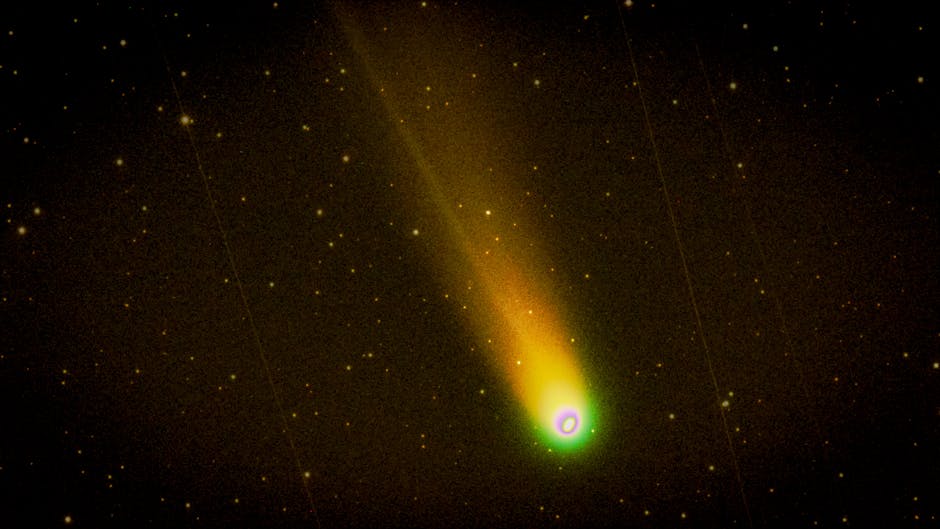
Foto: Jason Pittman / Pexels
12 billion years old, this interstellar comet is older than our solar system
One year ago, on July 1, 2025, astronomers discovered a fascinating new object moving through the solar system. Detected by the Asteroid Terrestrial-impact Last Alert System (ATLAS), the object was quickly recognized as something special.
Foto: Nicola Narracci / Pexels
A cataclysmic collision in space provides new clues on astronomy's biggest stalemate
Second only to black holes, neutron stars—incredibly dense star remnants—are the densest objects in the universe. When neutron stars collide, they create ripples in the fabric of space and time that we can detect on Earth.
Astronomers find an enigmatic source that is most likely a Little Red Dot in formation
Astronomers have, for the first time, found a source in the process of becoming a Little Red Dot, using the James Webb Space Telescope (JWST). Little Red Dots are likely early galaxies and some of the most intriguing objects found with JWST at high redshifts. The team, led by Kar
Foto: ayman said / Pexels
Comet from another star has a composition unlike anything else in our solar system
Astronomers have revealed new details about the makeup and age of a visiting comet that was born around a distant star. They conclude that the composition of 3I/Atlas is strikingly different from any object found in our solar system.
What makes a star a star? A strange 'in‑between' celestial object is testing astronomers'
A star called TOI-2155 lies around 1,350 light-years (839 trillion miles) from Earth. It is a little bigger, heavier and hotter than the sun, and it is not particularly interesting or unusual in itself.
Could this asteroid be a piece of the moon? A Chinese spacecraft is about to find out
The moon is not the only natural object traveling through space alongside Earth. Several small asteroids travel around the sun in near lockstep with our planet. And just like Earth, these space rocks also take a year to complete a full orbit. Today, we know of eight such "quasi-m
Foto: Monojit Dutta / Pexels
Older than the sun: Astronomers find new clues to the origin of interstellar comet 3I/ATLA
Astronomers have used the European Southern Observatory's Very Large Telescope (ESO's VLT) to study the composition of 3I/ATLAS, the brightest interstellar object ever seen, in detail. By measuring specific chemical fingerprints—the first observations of this kind for a comet tha
Foto: Google DeepMind / Pexels
Schrödinger’s anthill: Quantum entanglement found in a crystal large enough to hold
A centimeter-sized crystal has revealed clear signs of quantum entanglement, showing that large, everyday objects can display surprisingly deep quantum behavior. The discovery could help solve the mystery of strange metals while opening new possibilities for ultra-precise quantum
Foto: Iceberg San / Pexels
These ancient quasars shouldn't exist so soon after the Big Bang
Astronomers have uncovered 31 of the oldest known quasars, including the two earliest ever detected, shining from a time when the universe was only about 670 million years old. Powered by supermassive black holes billions of times the Sun’s mass, these incredibly bright objects c
New technique takes the heat out of 3D printing process
Researchers have developed a new 3D printing technique that allows the printing of whole objects while controlling the temperature of the chemical reaction to stabilize the process. Academics in the University of Nottingham's Faculty of Engineering, in collaboration with the Univ
Foto: Marek Pavlík / Pexels
Capturing the cosmic 'drift' before a star is born
Stars like our sun are formed from the collapse of stellar objects called prestellar cores, cold and dense concentrations of gas and dust held together by gravity. While many questions remain about the exact mechanisms of star formation, advanced radio telescopes have given resea