
🌊 Negócios em Emersão  ·  Vamos Emergir?  ·  Cadastre-se e ganhe 50 REC de bônus
Notícias

Acompanhe as Notícias da Recifes

Fique por dentro das últimas novidades sobre tecnologia, negócios e empreendedorismo.

110 notícias encontradas para "century"
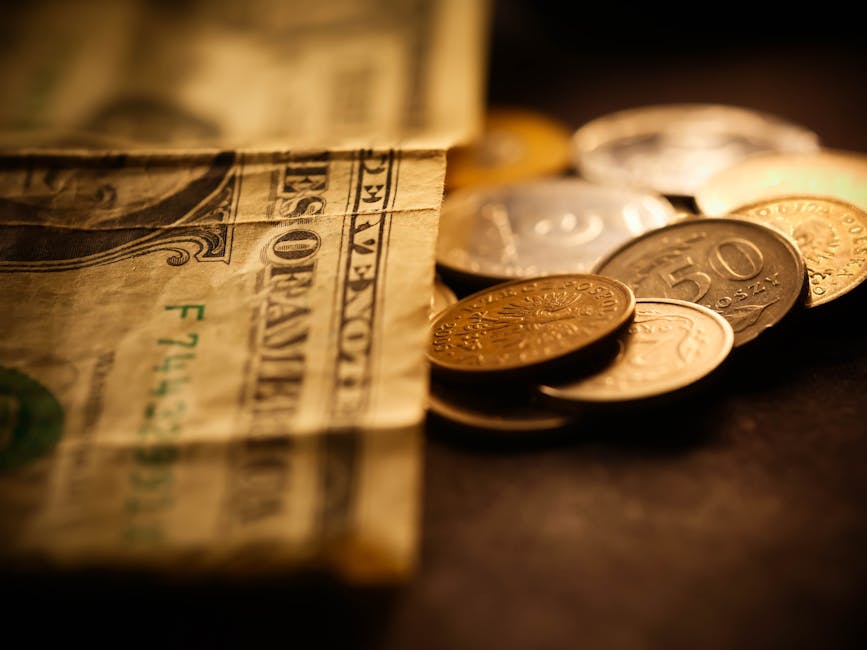
Foto: Rūdolfs Klintsons / Pexels
Postwar research compact fueled U.S. prosperity for eight decades, argues commentary
As the United States celebrates 250 years of independence, Science has published a commentary by Johns Hopkins University President Ron Daniels highlighting the impact of the reimagining of the American university pioneered by Johns Hopkins in the late 19th century—and how the be
Two centuries on, experts unlock secrets of Red Sea and Gulf of Aden sailing chart
Experts have unlocked secrets hidden for two hundred years in a beautiful navigational chart made for 18th century seafarers negotiating the Red Sea and Gulf of Aden. The paper scroll is evidence seafaring communities in the region used their own effective system of navigation th
Bomb the Arctic, dam the Mediterranean and build a second moon: five outlandish plans to r
Humans have long sought to geoengineer the Earth’s environment. Tim Flannery outlines a few of the wildest ideas from the 20th centuryAn increasing number of scientists think we have let the climate crisis fester for so long that our only hope to stave off ever-intensifying catas
Phylogenomics reveals angel insects' ancestry, resolving century‑old 'Zoraptera problem'
Zoraptera, also known as angel insects or ground lice, are tiny termite-like insects generally found underneath bark or in decaying wood. The Zoraptera group includes a few dozen known insect species that closely resemble each other.
Global warming, increasing wildfire risk threaten viability of some California winery regi
The U.S. is the fourth-largest wine-producing country by output volume, and approximately 80% of its production occurs in California. Ever since the 19th century, California's premier wine-growing regions have been the Napa Valley and Sonoma County, thanks to their favorable micr
Slowing Atlantic current could fuel stronger California atmospheric rivers by century's en
A slowing Atlantic Ocean current is projected to intensify powerful storms in California while reducing snowfall over Greenland, according to a recent University of California, Riverside study. The Atlantic Meridional Overturning Circulation (AMOC) works like a giant conveyor bel
'Check your ingredients': A new blueprint for using Fermi's 'Golden Rule'
Underpinning much of modern technology, from smartphones to scanning tunneling microscopes to particle colliders, is Fermi's Golden Rule. Named for 20th-century Italian American physicist Enrico Fermi (but actually discovered by British physicist Paul Dirac), the rule is a formul
Darwin's 150‑year‑old hillside steps mystery may have a new answer from virtual grazing an
Steep hillsides and mountainsides in many regions worldwide are often covered in characteristic step-like patterns, also known as terracettes. These repeating landforms have fascinated scientists for more than a century, yet the factors contributing to their formation had not bee
High-status Iron Age burials reveal early links to Roman Empire
A large cemetery containing the lavishly adorned remains of unidentified high-status individuals dating from around 2,000 years ago has been uncovered by archaeologists from Archaeology South-East (UCL Institute of Archaeology). The completed excavations near Chelmsford, Essex, r
To ancient astronomers, Theta Eridani was brighter for 1,000 years—now we know why
There's a bit of a historical mystery surrounding the star Theta Eridani. Ptolemy in the second century A.D. and al-Sufi in A.D. 964 both recorded Theta Eridani as one of the 13 brightest stars in the sky. Hipparchus may have said the same. But there's a problem. For it to be one
Dark energy flips its sign, but the Hubble tension refuses to budge
For nearly a century, astronomers have known that the universe is expanding. In the late 1990s, two independent teams, the Supernova Cosmology Project, led by Saul Perlmutter, and the High-Z Supernova Search Team, led by Brian Schmidt and Adam Riess, discovered something strange:
Synthetic rotation brings black hole energy theory into lab, amplifying waves
More than half a century ago, Sir Roger Penrose envisioned a scenario in which energy could be extracted from a black hole spinning at extreme speeds. He proposed that a particle entering its ergosphere—a region of space dragged around by a rotating black hole—could split into tw